The Naturalism Myth: Realistic Acting Is Still a Style
Naturalistic acting is still a style, not a neutral default. See how its conventions shape what an audience accepts as ordinary and believable onstage.

Why does one scene feel like a glimpse into a private world while another feels arranged for an audience? Naturalistic acting offers a useful answer: its realism comes from conventions that make a stage world seem ordinary, not from copying daily life wholesale. Those conventions shape what the audience accepts as plausible.
Think of naturalism as a familiar room arranged for a visitor. The chairs may look ordinary, but someone chose where they go and what the visitor can see. Onstage, similar choices establish a world through its social rules, practical details, and limits.
A believable world follows consistent rules
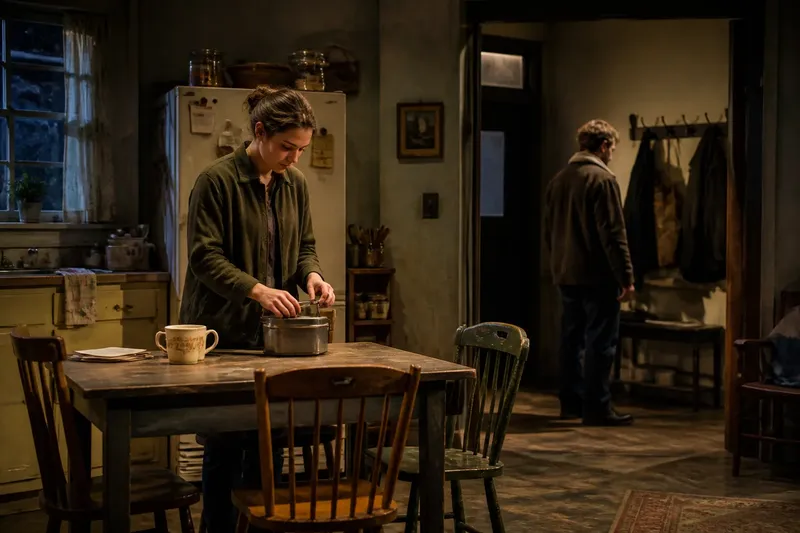
Naturalism asks an audience to accept the stage as a place where events have causes and consequences. A character’s actions should make sense within the world the play establishes, even when the situation is unusual. If a room is presented as a cramped rental kitchen, for instance, the actors’ use of space can reinforce that condition; treating it like a grand hall would strain the illusion.
This consistency is not the same as literal accuracy. A production may compress time or omit routine business, yet still feel plausible if its characters respond in ways that fit their circumstances. The audience is not checking whether every detail matches life outside the theater. It is sensing whether the details belong together.
Social rules shape what feels ordinary
Naturalistic worlds carry assumptions about status, privacy, work, family, and authority. A character may defer to a landlord, speak freely with a sibling, or hide a problem from a colleague. These relationships help define what behavior seems normal in that setting.
Those assumptions can be revealing. If a production treats one character’s customs as the default and another’s as strange, it frames whose experience counts as ordinary. Audiences can notice that framing without dismissing the world the play creates.
Objects and routines establish a world
Furniture, food, clothing, and repeated tasks can supply context without explanation. A worn kitchen table may imply years of use; a carefully cleared desk may suggest a workplace where personal space is limited. Such details matter when they connect to the action, rather than appearing as decoration without consequence.
Imagine an invented scene set in a shared office, with a desk lamp, a stack of folders, and one chair facing the door. Say the director has the junior employee keep the folders squared while the manager speaks, then leave them crooked after a tense exchange. The audience can see a shift in the character’s composure without needing the scene to name it.
Naturalistic acting depends on the world around it
An actor’s choices become legible through the setting and the relationships the play establishes. A pause in a formal interview may carry a different implication from silence among close friends. Likewise, a character’s way of handling a shared object can suggest whether they feel entitled to it, cautious around it, or responsible for it.
This is where naturalistic acting differs from mere imitation. The performer does not need to reproduce every everyday habit. The task is to make behavior fit the scene’s circumstances so the audience can follow the character’s aims and constraints.
What do audiences ask about naturalistic acting?
Is naturalistic acting the same as method acting?
No. Naturalistic acting describes a performance style that aims for a plausible stage world. Method acting is one family of performance approaches; actors can create naturalistic results through different training and rehearsal practices.
Does naturalism mean everything onstage must be realistic?
No. A play may compress time, use symbolic objects, or heighten an event while retaining a coherent world. The audience needs enough consistency to understand the relationships and consequences, not a copy of every detail of daily life.
Why can a realistic performance still feel theatrical?
Theater selects what an audience sees and hears, then places it in a shared viewing space. Even a restrained scene is shaped by staging, timing, and the boundary between performers and spectators.
How can I tell which conventions a production is using?
Notice what the play treats as normal, which details receive emphasis, and how characters respond when a rule is broken. Those patterns show how the production asks you to understand its world.
Naturalism makes its choices through selection
A play cannot show every routine action surrounding an event. It selects a slice of life and gives that slice a shape. Naturalistic acting works within the same limit: the performance invites belief by making chosen details feel connected to the world and its people.
To read naturalistic acting more closely, ask what the scene assumes about work, home, status, and privacy. Then notice who benefits from those assumptions and who is constrained by them. That question keeps realism from passing as a neutral view of life.