A Bare Stage or a Detailed Room? Two Ways to Direct Attention
Compare bare and detailed stage design to direct audience attention, support a play’s shifts, and choose what each scene needs without favoring either style.
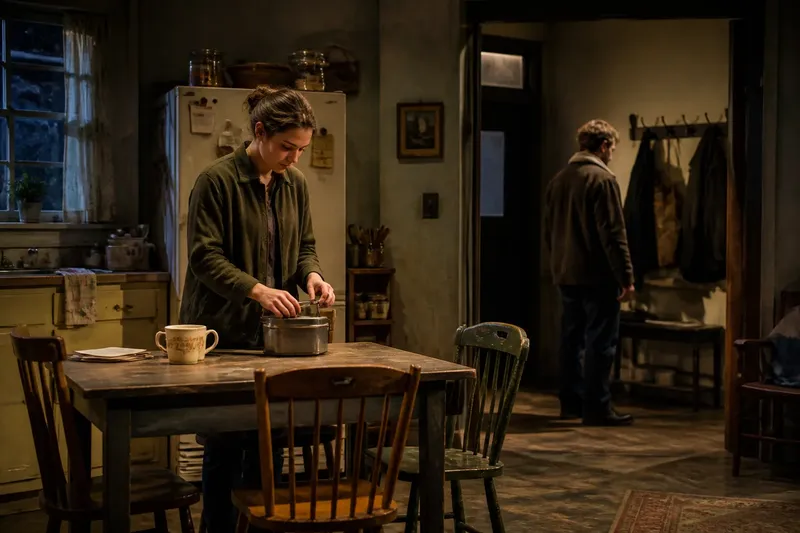
Should the audience see a bare platform or a room crowded with furniture? Stage design can direct attention before an actor speaks, and the choice between sparse and detailed staging is less about taste than about what the play asks viewers to notice. A bare stage can make a gesture or change of space legible; a furnished room can give objects and habits their own dramatic weight.
Neither approach is automatically clearer or more expressive. Each creates a different relationship between performer, object, and audience. A useful way to decide is to follow the play’s changing demands through the rehearsal process, then let the design keep only what helps those demands register.
Begin with the play’s attention shifts
Before choosing furniture, mark the moments when attention should move. A scene may turn on a character entering, a letter being withheld, a change in who has power, or a room becoming unfamiliar. Ask what the audience must notice at each turn, and what can remain in the background.
This is not a request to decorate the script line by line. Look for recurring actions and changes in relationship. If a chair becomes a place of authority, its position matters. If the scene’s force comes from a family’s inability to speak openly, a crowded table may help, but so might a single bench that leaves the actors exposed.
Write a brief attention map for each scene: the central focus, any secondary focus, and the moment when that focus changes. Then compare scenes. A play that repeatedly shifts between public ceremony and private thought may need a flexible stage picture. A play rooted in one domestic routine may benefit from a room whose details accumulate meaning.
Choose sparseness when the actors need room to transform the space
A bare or lightly dressed stage lets bodies, light, and sound do more of the spatial work. A chair can become a train seat, a courtroom witness stand, or a place at the edge of a family gathering. The audience watches the transformation happen rather than entering a fully specified room at the outset.
This approach can sharpen focus. With fewer objects competing for notice, a small movement may carry clearly: someone turns away from a group, leaves a coat untouched, or takes the only seat. But sparseness is not the same as emptiness. The room still needs a visual logic. A bench, a doorway suggested by light, or a single practical object can establish the rules of the stage.
Use a sparse arrangement when:
- The play moves between places quickly, and scene changes should remain visible.
- The actors’ physical choices carry more meaning than the room’s furnishings.
- The script depends on shifts in scale, time, or point of view.
- A single object recurs and needs to stand out from its surroundings.
- The production wants the audience to imagine details rather than receive them all at once.
These are prompts, not rules. If a supposedly minimal design leaves actors with no useful spatial relationships, add a clear anchor. A platform edge, a narrow table, or a cluster of stools can give a scene shape without closing down its possibilities.
Choose a detailed room when objects carry the play’s pressure
A detailed setting gives the audience a specific environment to read. A chipped mug, a neatly folded blanket, or a stack of unopened mail can suggest routine and tension, especially when performers handle those objects with purpose. The room can show what characters value, avoid, maintain, or cannot afford to change.
Detail works best when it has dramatic duties. An object may be used, noticed, refused, hidden, or left in a changed position. If no one interacts with a decorative feature and it does not shape the audience’s understanding, ask whether it belongs. A room filled with accurate-looking objects can still feel generic if the details do not express this play’s particular relationships.
Picture a fictional production of a family drama set in a kitchen where a character is preparing to leave. The director and designer might choose a detailed room with a packed lunch tin, a half-cleared table, and a familiar coat hook. The character’s hesitation becomes visible when the tin is packed but the coat stays behind. The expected result is that viewers can read the departure through ordinary objects, without needing the room to explain the character’s feelings for them.
That same scene could work on a bare stage with one tin and a coat. The difference lies in the audience’s field of attention: the detailed room places the action within a specific domestic routine, while the sparse version makes the chosen objects carry more of the image.
Let rehearsal reveal what the room needs
Design decisions become more reliable when tested against actor movement, not just discussed around a table. During early blocking, use simple substitutes: taped floor marks for a table, rehearsal cubes for chairs, or a cardboard shape for a large object. These stand-ins reveal paths, sightlines, and whether a prop helps or interrupts the action.
At the end of a scene, ask the director, performers, and designer to name what they believe the audience should have noticed. If their answers diverge, the stage picture may be sending mixed signals. Adjust placement or remove a competing object, then run the scene again and compare what the performers can make legible.
Check practical details as part of the artistic conversation:
- Can the audience see faces and important hand actions from the sides of the house?
- Do entrances and exits remain clear when furniture is occupied?
- Can performers move around the set without looking down to avoid clutter?
- Does an important prop have a clear place before and after it is used?
- Do scene transitions preserve the intended pace and focus?
- Does the lighting reveal useful textures without turning minor details into distractions?
When an answer points to a problem, choose the smallest change that addresses it. Moving a lamp, simplifying a tabletop, or shifting a chair may be enough. If scenery involves rigging, powered equipment, or other safety-sensitive work, leave those decisions to qualified crew members and follow the venue’s procedures.
Match the design to each scene’s job
A production does not have to choose one visual density for every moment. A detailed room can lose furniture as a character’s control breaks down. A sparse stage can gain a few objects as a private world takes shape. Such changes can be powerful, but they need a reason the audience can follow rather than a shift made simply for variety.
Consider transitions as part of the storytelling. If the stage changes while performers remain present, the audience sees space being made or dismantled. If the change happens in darkness, the new arrangement may feel like a clean cut. Neither option is inherently stronger; decide whether the shift itself should be visible and meaningful.
As a final pass, return to the attention map. For each scene, name the image or action that should stay with the audience, then remove or reposition anything that competes without adding a useful layer. A bare stage or detailed room is not a verdict on the play’s seriousness or realism. It is a set of choices about what the audience sees first, what it discovers later, and what the performers can make matter.
The useful question is not how much scenery a production can afford or fit. It is what the room allows the audience to read. Sparse or richly furnished staging can both serve that purpose when every visible element has a clear relationship to the play’s action.